Showing posts with label stress. Show all posts

Saturday, 12 September 2026

How to Feel Like Yourself Again When Life Feels Like Too Much

 Sometimes life doesn’t fall apart all at once. Instead, you slowly stop feeling like yourself.

You wake up tired, spend your day trying to keep up with work, come home with a mind that refuses to switch off, and somehow repeat the same cycle the next day.

You want peace, but your mind is constantly anxious.
You want rest, but your body feels exhausted.
You want to enjoy life, but you are always thinking about the next problem.
You want to change your job, become financially stable, invest in yourself; and yet, you feel like there is simply no time or energy left to start.

If this sounds familiar, you are not necessarily failing at life. You may simply be overwhelmed.

Why do you feel this way?

1. You are mentally overloaded.
When your mind is constantly thinking about work, money, career, responsibilities and the future, it never gets a chance to rest. This can make even small things feel exhausting.

2. You are physically exhausted because you are emotionally exhausted.
Stress doesn't only live in your thoughts. Constant pressure can affect your sleep, energy, concentration and motivation.

3. You are trying to balance everything at once.
Work-life balance can sometimes become another responsibility. Instead of living, you start constantly asking yourself, “Am I doing enough?”

4. You are living too much in the future.
When your mind is focused on getting a better job, earning more, becoming stable or fixing your life, you can forget that your present life also deserves to be lived.

5. You feel stuck because change feels financially risky.
You don't like where you work, but you can't simply quit. You need an income. That conflict can make you feel trapped.

So, how do you start feeling like yourself again?


Start smaller than you think.

You don't need to change your entire life overnight.

Give yourself 15–20 minutes a day that belong only to you. Take a walk, sit quietly, journal, exercise, read, listen to music—or simply do nothing without feeling guilty.

Start separating “I need to survive” from “I want to build a better life.”

You may not be able to leave your current company today, but you can spend 20–30 minutes several days a week applying for jobs, improving your skills or updating your resume. Small steps eventually create exits.

And most importantly, stop expecting yourself to be productive every minute.

Rest is not laziness.
Having a difficult phase doesn't mean you are behind.
And wanting a different life doesn't mean you should hate the life you have today.

Try to solve one problem at a time.

Take care of your body. Quiet your mind when you can. Protect your small moments of happiness. Work toward financial stability without sacrificing your entire present for an uncertain future.

You don't need to have everything figured out.

Maybe right now, your goal isn't to completely transform your life.


Maybe your goal is simply to feel like yourself again—one small choice at a time.

And sometimes, that is where real change begins.

Saturday, 23 July 2022

Ways to handle stress

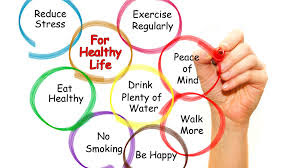
The pictures below are taken from web and are self-explanatory in their own way, listing few keys to manage stress. 


But when it comes to actually managing the devil, the biggest problem, the worst nightmare; sometimes even these tips fails to do any good and that’s what makes it difficult for us to face the reality with the good lively spirit.


Hence here I have tried to list down some of my personal favourite ways which are tried and tested in my life and might help you as well.


1. Focus on what you can control:
Most of the things that stresses out have nothing to do with us. They aren’t up to us. They aren’t worth worrying about. 

2. Prepare for it in advance:
Don’t just do positive visualization, do negative visualization as well. Seneca says, the blow you anticipate, lands the least heavy.

3. Morning Journal:
Every morning I spend a few minutes with journal; writing down my thoughts, working out what I am stressed about. Then I do the same thing in the evening, where I review how the day went, what I could do better. Did I really need to be worried? Did my worry make anything better?

4. Have a hobby:
Have something that’s different than your work. It’s different than your kids. That allows you to put some of your energy to good use. 
The Stoice like to say that we should laugh at life, don’t cry about it. That is, don’t let everything weigh on you so much. Life is absurd rather than terrible. 

5. Memento Mori:
You are going to die. We are all going to die. None of this is just permanent. Relax. In the light of your very fragile mortality, almost nothing is worth stressing about.


Wishing you all a very nice and less worrisome life. Don't expect it to be without problems. After-all, it is life and hence synonymous to problems; just be an expert in managing the things what life brings to you.

Looking forward to know your views on these in the comment section below.

Thursday, 6 April 2017

Lessons I learnt being in a Long Distance Relationship

There are no two ways around it… being apart from the one person you most want to be spending time with is stressful. Learning to communicate well and stay connected across distance is stressful. And there are plenty of other things that pop up in life that are stressful, too.
Dentists, anyone? Exams? Driving in Capital?


Is stress always bad for us?

Don’t get me wrong, stress is not always bad for us.

Without some pressure in our lives, we stagnate. We need some challenges in life to help focus us, motivate us, and keep us stretching, learning, and growing.

However, too much stress can overwhelm us—at least temporarily.

Most of us in long distance relationships have experienced times when we felt close to breaking or completely overwhelmed.

And what do we tend to do when we feel stressed and overwhelmed?

We often reach for things that bring us comfort (familiar foods and routines). Or escape into entertainment or games. Or try to avoid the things that are stressing us out.

We often to spend all our “coping energy” on what we need to do to get through the day, and then take out our fatigue and frustrations on those closest to us.

How stress impacts your relationship

Many couples communicate quite well when life’s skies are sunny and it is all smooth sailing. However, when clouds roll in and the wind picks up, it can be a different story.

When you or your partner (or both) are tired and stressed, misunderstandings and conflicts can arise as quickly as summer storms.

You might find yourself getting annoyed more easily. Or arguing more frequently. Or speaking to your partner in a curt, impatient tone you’d never use on a work colleague.


On the other side of the coin, you can find yourselves confused and frustrated by your partner moods, words, and actions. You can feel helpless to know how to approach them (especially if you’re far apart), or what to do or say.

Either way, the very relationship that you count on to help sustain you can become another draining source of tension, right when you need help the most.

How to stop stress destroying your relationship

One of the best things you can do to make these times easier is to discuss these dynamics with your partner when you are not tired or stressed.

The better you understand how each of you typically thinks or feels during times of stress and pressure, the better you will be able to encourage and support each other during those extra-stressful times. Yes, even if you’re far apart.

Answer these questions

Here are 10 questions you can talk over with your partner.

These questions are designed to help you learn more about how each of you responds to stress and pressure. Take your time with these and really delve into the details! Discussing these questions on good days (before you’re all stressed out) will yield big dividends on bad days. I promise.

1.    What are the biggest sources of stress or pressure in your life right now?
2.    Where is the biggest mismatch in your life right now between what you believe and how you are acting?
3.    Do you feel “out of balance” in any area of life right now? What are those areas?
4.   When you feel stressed, how does that show up in how you interact with other people?
5. When you are under pressure, what are some of your “early warning” signs of stress?
6.   When you become aware of your early warning signs, what do you do to help prevent your stress from growing?
7.    What are some of your typical self-care and coping strategies when you are stressed, tired, or anxious? (Make sure you think about coping strategies you use that are “good for you,” and those that “aren’t so good for you.”)
8.  What are one or two things that help you manage stress and pressure that you want to be able to do more often?
9.  When you are struggling, how can your partner best help you? What are good ways to approach you and good questions to ask you when you’re stressed?
10. Since caring for yourself is foundational to being able to care well for your important relationships, how can your partner encourage you to take care of yourself?